
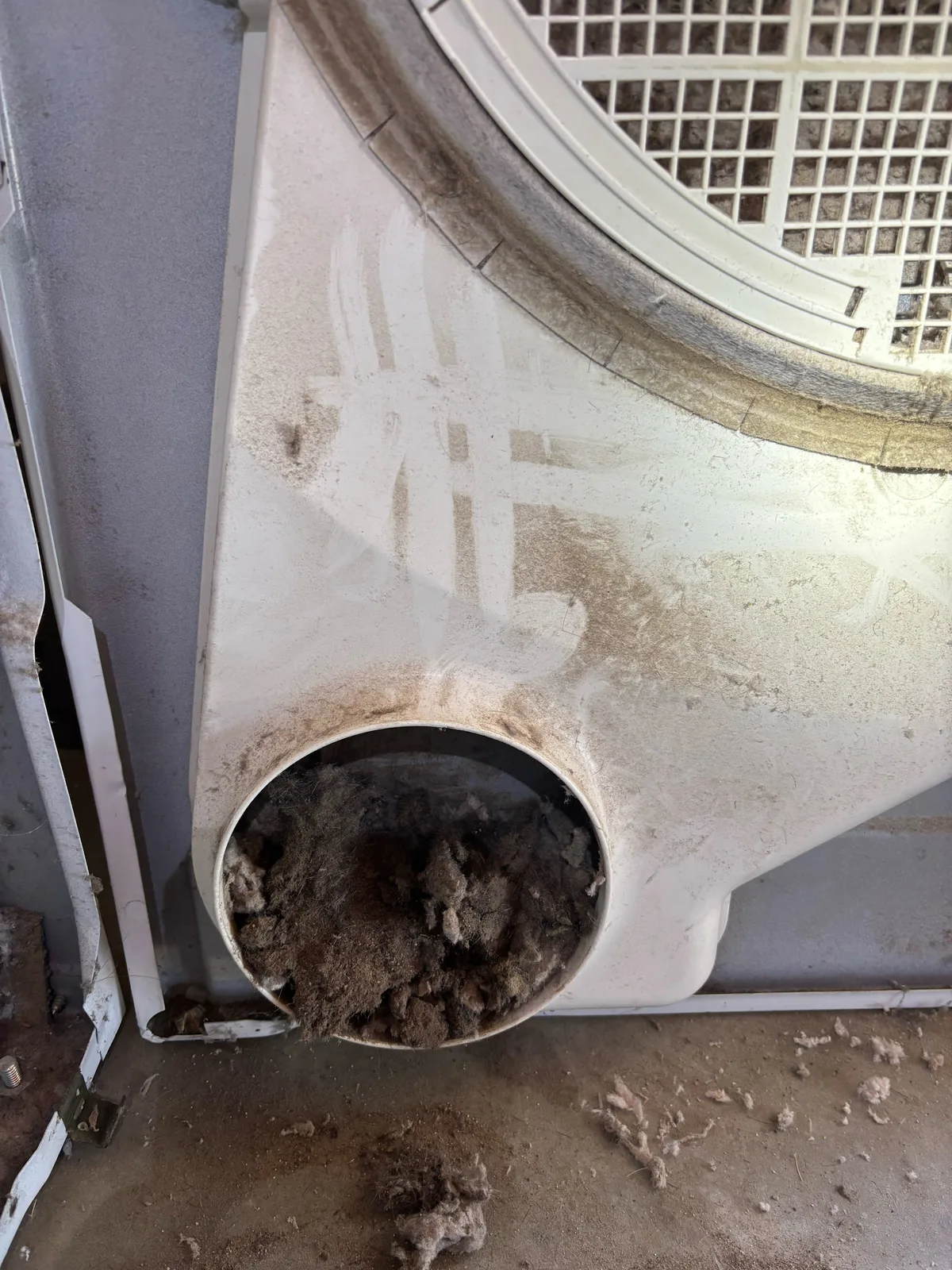
1. Start with the lint screen
Clean the screen before or after every load, following your manual. Check that it is seated correctly and undamaged. A clear screen is the first check; it doesn't tell you whether the rest of the air path is clear.
2. On a vented dryer, check the path outside
Drying needs somewhere for moisture to go. A crushed connector behind the dryer or an obstructed exhaust duct can slow that down. Look for visible damage without pulling out a heavy or stacked appliance. An outside vent that is safely visible from ground level should open as air exits during normal operation.
If the vent is damaged, blocked or out of reach, have it inspected. Don't disconnect the duct and run the dryer into the room as a test. Cleaning and inspection frequency should follow the installation, usage and manufacturer's guidance, with attention sooner when drying times increase.
Our dryer vent safety guide explains the route from the machine to the outdoor outlet and who services each part.
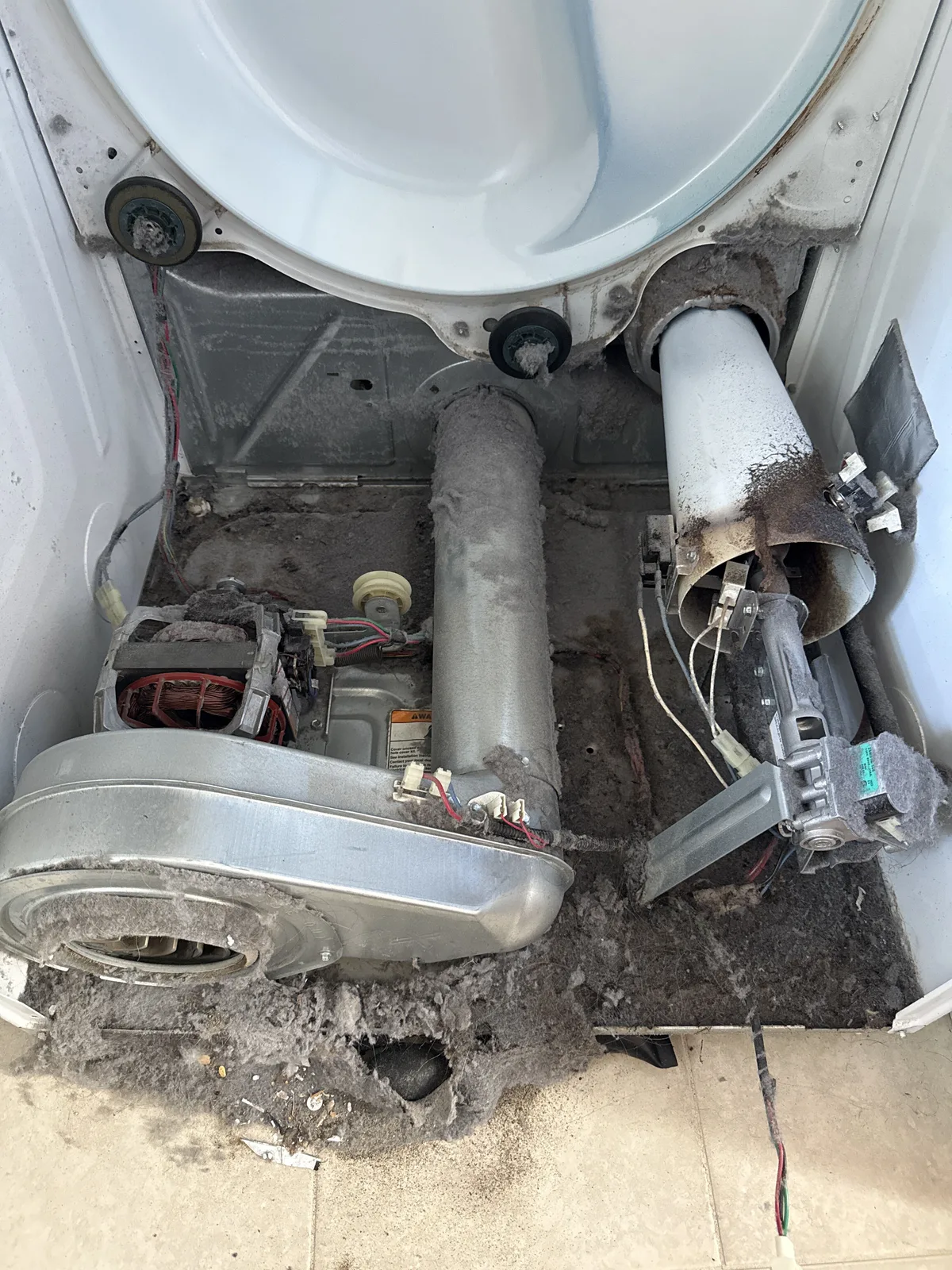
A clean screen doesn't show the whole picture.
This service photo from Kelly's archive shows lint inside the cabinet. Internal cleaning requires access to the machine; it is separate from cleaning the duct through your house.
Leave cabinet access to a qualified technician.
3. Give the load room to tumble
A packed drum makes drying harder. Follow the load limit in the manual and separate heavy towels or bedding from lighter clothing. If only thick seams or one heavy item stay damp, look at the load mix before assuming the entire dryer has failed.
4. Check the cycle and dryness setting
Air-only, delicate and lower-heat settings serve different purposes. Make sure the chosen cycle suits the fabrics and the result you want. There is no universal 30- or 45-minute benchmark: dryer type, load size and starting moisture all affect timing.
Tell the technician what changed. Does the same load now take two cycles? Does the issue happen on one setting or every setting? That history is more useful than repeatedly extending the timer.
5. Check how wet clothes leave the washer
The dryer may be receiving more water than usual. A low-spin setting or a washer that fails to complete its final spin can leave a load excessively wet. Check the washer's selected cycle and any error message first.
If poor spinning keeps happening, read the signs your washer needs attention. Mention both appliances when requesting service so the diagnosis starts in the right place.
6. Look for a pattern with automatic cycles
On sensor cycles, the dryer estimates when the load has reached a selected dryness level. Small loads and mixed fabrics can make the result less consistent on some machines. Consult your model's recommendations for load size, dryness settings and sensor care.
A cycle ending early does not by itself prove that the sensor is broken. Avoid a generic cleaning product or dismantling instructions: sensor locations and care requirements differ by model.
7. If there is little or no heat, get the cause diagnosed
First confirm you haven't selected an air-only cycle. A turning drum does not rule out a power-supply problem, and heating components or controls can also be involved. The symptom alone cannot identify which part needs replacement.
Our dryer not heating guide covers that symptom in more detail. Persistent no-heat trouble, overheating or an unresolved change in drying time calls for a service diagnosis.
Dryer repair or vent cleaning?
Kelly's works on the dryer: internal lint buildup, airflow checks at the machine and failed components. The duct running through a wall, attic or roof is a dryer vent company's job. Both can need attention; cleaning a duct won't repair a damaged machine component.
When you contact us, have the model number, the cycle you used and a short description of what the clothes feel like at the end. Tell us if the vent was recently cleaned. We serve Sonoma, Marin and Napa counties.
If you're weighing a repair against replacement, start with the diagnosis and estimate. Our repair-or-replace guide walks through the other factors to consider.
Still running that second cycle?
Tell us what's happening. Kelly's can diagnose the dryer and help you understand whether the vent needs a specialist too.
